


- Home
- >
- En
- >
- See and do
- >
- Ars longa, vita brevis
Ars longa, vita brevis
Permanent collection presentation
Ars longa, vita brevis ("art is long, life is short") was for a long time the permanent collection presentation at Rijksmuseum Twenthe, centered around the theme of the human condition.
Human Life in Nine Episodes
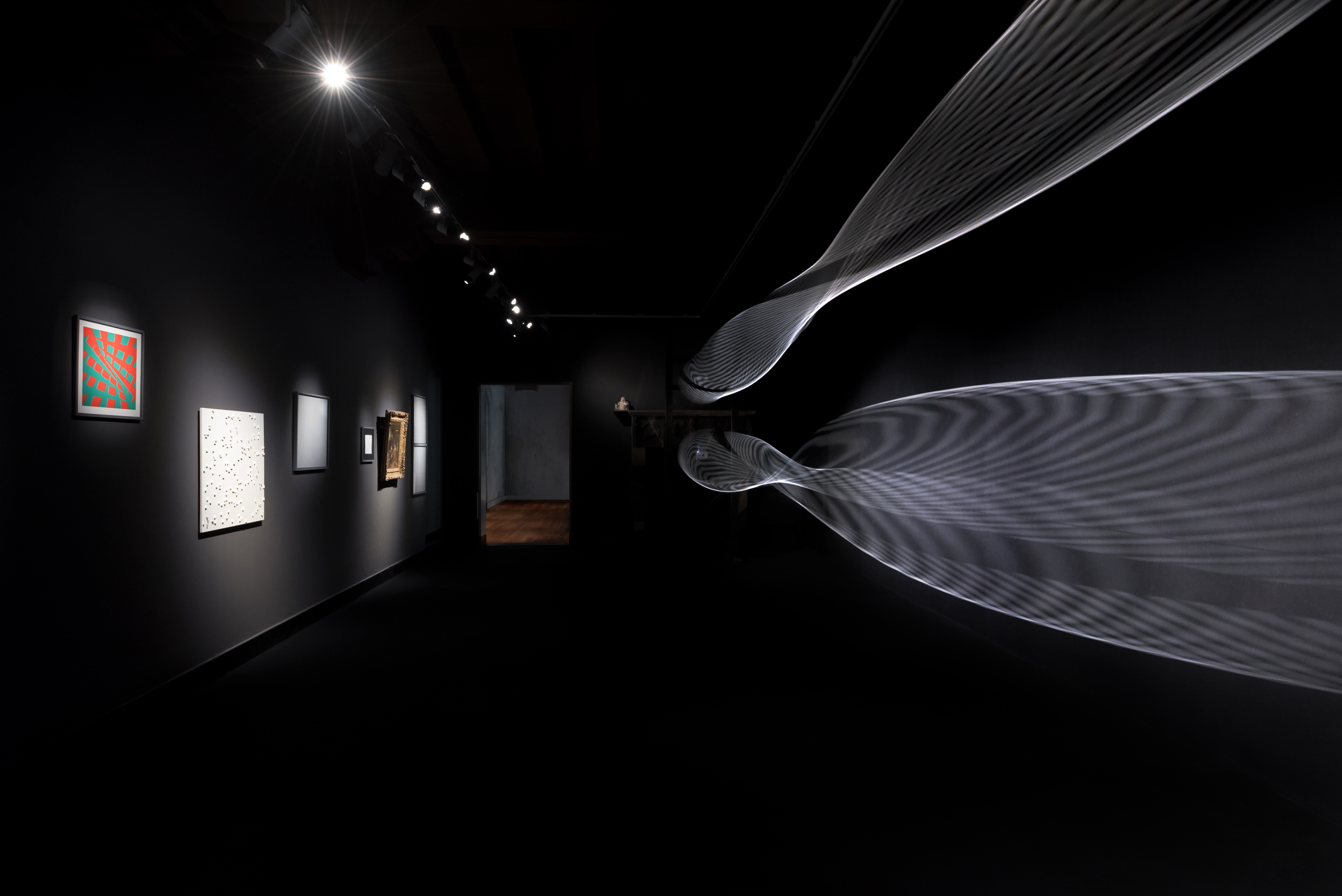
The museum invited nine artists, each to design their own gallery space, using works from the museum's collection in dialogue with a new or existing piece of their own. The result is a sequence of nine consecutive rooms, each transformed into an installation in which the artists reflect on La condition humaine — the human condition in the 21st century.
The nine artists who contributed to Ars longa, vita brevis are Bart Hess, L.A. Raeven, Berend Strik, Philip Vermeulen, Anne Wenzel, Peter Zegveld, Karin Arink (in collaboration with Renée Kool), Armando, and Silvia B. Their installations trace the stages of human life, beginning with desire in the first room and concluding with memento mori in the final one — in other words, human life in nine episodes.
(Unfortunately, Armando passed away in 2018 at the age of 88. He never saw the final result of his last project Ars longa, vita brevis / The Beauty of Evil. Yet his art lives on.)
The Human Condition
“Religion and humour are ways to avoid thinking about death — art seduces us into doing exactly that.”
This quote by visual artist Joost van den Toorn is a response to the question of what ultimately drives his work. For him, art is a way to confront fear — in this case, the fear of death — and by doing so, to come to terms with it.
Another strategy is to turn away from fear altogether — for instance, by imagining a perfect world to come. For centuries, religion, and Christianity in particular, offered a satisfying answer to the imperfection of human existence. In the afterlife, believers were promised a state of harmony that would last for eternity. This stood in stark contrast to earthly life, which is defined above all by its fundamental duality. Good never exists without evil, and beauty never without ugliness.
Over the course of the 20th century, belief in a divinely ordered universe and the promise of heavenly redemption ceased to be satisfying answers to the human condition. Instead, the very notion that we will never attain a state of perfection has become central to how we think about ourselves. Our reality is riddled with contradiction. Our world is fundamentally dual, and human conflict and division are inescapable.
Unlike religion, the arts offer no conclusive answers to this condition. But they do offer ways of engaging with it. Creating and experiencing art can be a way to grapple with our inherent lack — particularly by focusing in on the duality of human existence. That is why the human condition — specifically, the human condition of the 21st century, shaped so profoundly by this duality — is the central theme of Ars longa, vita brevis.


Ars longa, vita brevis
The nine episodes of Ars longa, vita brevis are all shaped by the dualities described above:
Desire, Need and restraint, Mystery and its loss, Play and control, Connection and freedom, Willpower and incapacity, Control and release, Loyalty and betrayal, and finally, Memento mori.


