


- Home
- >
- En
- >
- See and do
- >
- Danger & Beauty: Turner and the Tradition of the Sublime
Danger & Beauty
Turner and the tradition of the sublime
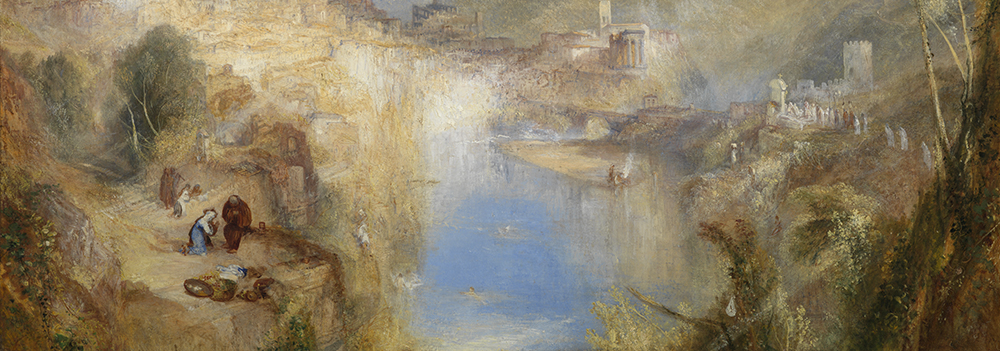
Throughout his long painting career, Joseph Mallord William Turner (1775–1851) sought the sublime in nature. The 18th-century philosopher Edmund Burke described the "sublime" as an experience of intense emotions evoked by ultimate beauty, but also by threat and danger. Turner aimed to experience these sublime sensations by subjecting himself to harsh sea voyages or by visiting deserted ruins and overwhelming waterfalls. In his paintings and watercolors, he studied the elements Earth, Air, Water, and Fire intensively. For Turner, these four forces of nature were the key to expressing a deeply personal, sublime experience.
Personal Experience First
Turner’s landscapes were unprecedentedly innovative in the early 19th century. “He carried art further than it had gone before,” said biographer Walter Thornbury about this Romantic landscape painter. While painting had traditionally been a mirror of nature, Turner went a step further by subjecting nature to his own laws and rules. A faithful depiction of the landscape gave way to one shaped by personal experience. Art became autonomous, and with Turner, the first modern artist was born.
Aesthetic Autonomy
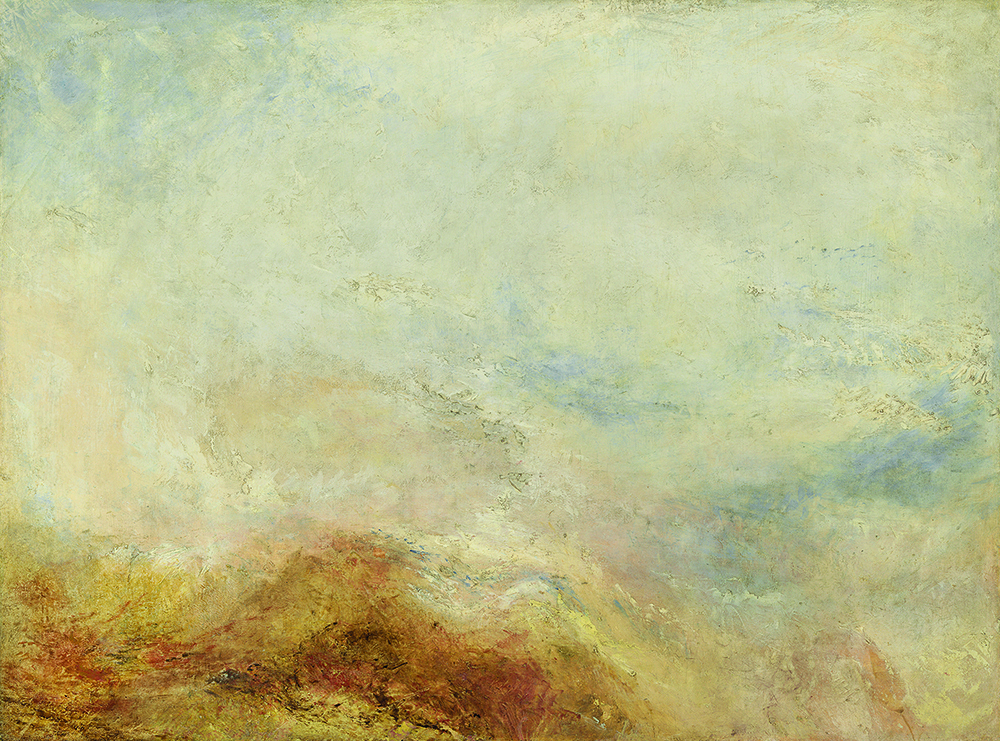
This exhibition shows how Turner drew inspiration from 17th- and 18th-century painting to develop a radically new conception of art, centered on ‘aesthetic autonomy.’ Turner created his own domain—free from prevailing rules and values—where he expressed his sublime experience of reality in his own way. The exhibition also demonstrates how Turner’s fresh vision of the world became a tremendous inspiration and trailblazer for many artists who followed, continuing to this day.
Trailblazer
Few painters have influenced art history as profoundly as William Turner. This becomes clear in Enschede and Zwolle as well. French Impressionism, exemplified by Claude Monet, or Dutch Luminism, represented by Jan Toorop and Jan Sluijters—both seeking to capture the pure sensation of light with paint—would be unthinkable without Turner. Giacomo Balla, who made the dynamism of modern life the subject of his art, also found a precursor in Turner. The same goes for artists like Richard Long, who turned the physical experience of landscape into art, or Piero Manzoni, who depicted infinity with completely white paintings. Contemporary artists consciously following the path Turner set include Raquel Maulwurf and Eyal Gever.


The exhibition publication Danger & Beauty: Turner and the Tradition of the Sublime is published by Waanders Uitgevers and will soon be available in the Museum Shop of Rijksmuseum Twenthe.
Danger & Beauty is made possible with the support of the Turing Foundation, the Mondriaan Fund, Fonds 21, and the VSB Fund.


