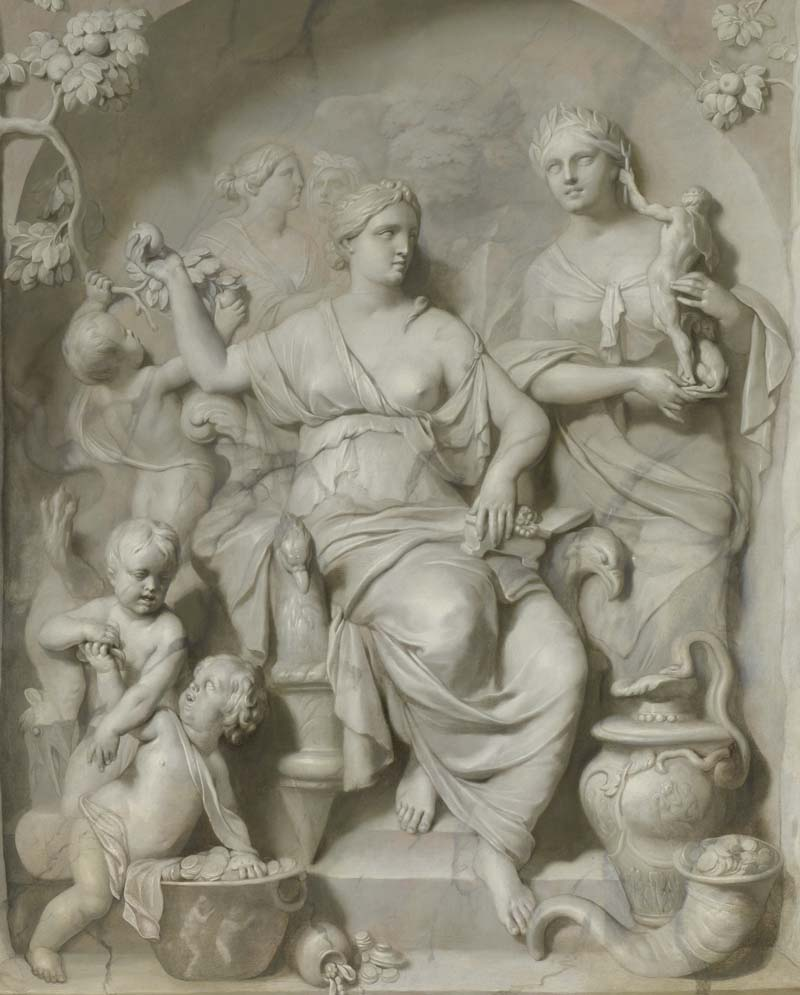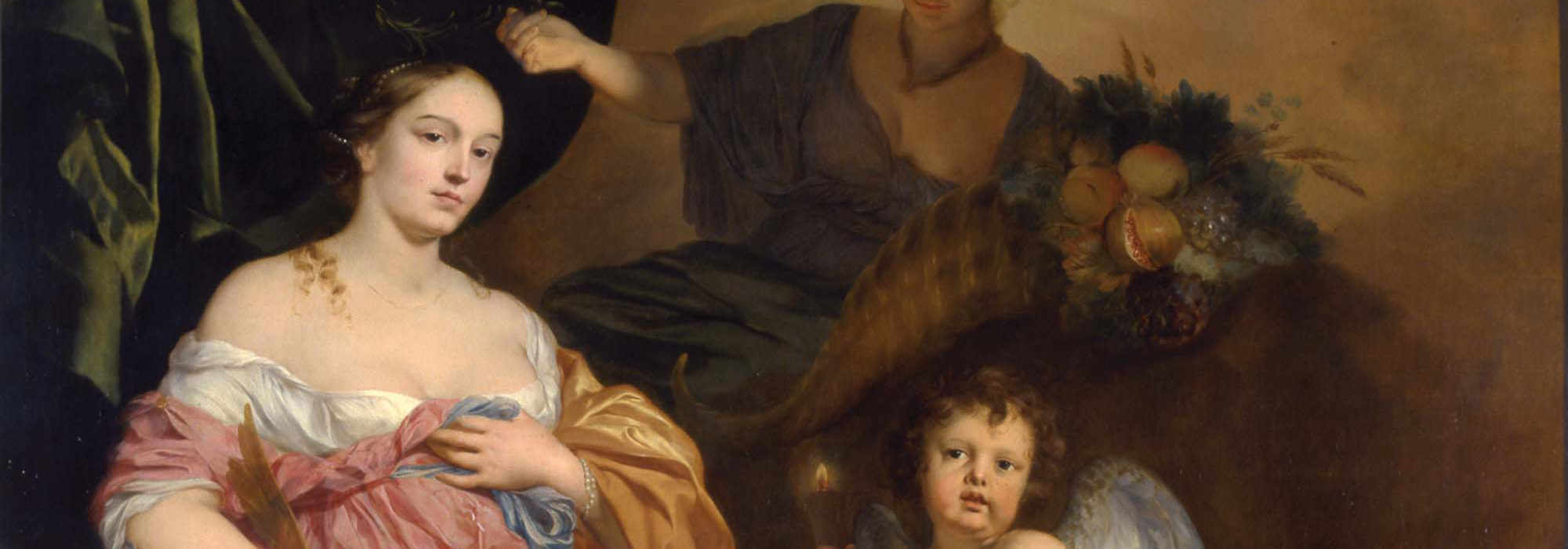
Gerard de Lairesse championed classical beauty and shaped the artistic ideal well into the 19th century. “Gerard de Lairesse was the most important painter of our Golden Age, not after Rembrandt, but alongside him,” says Gregor J.M. Weber, Head of Visual Arts at the Rijksmuseum Amsterdam and curator of The Late Rembrandt. So how is it that his name isn’t more widely known?
Our National Self-Image
After the Batavian Republic, the Netherlands began searching for its own identity. From that moment on, De Lairesse no longer fit within our nationalist self-image. He was considered “too French” and classical—not “Dutch” enough. The magnificent works of Gerard de Lairesse were pushed out of our national memory, yet true admirers have never forgotten them. With the exhibition Finally! De Lairesse, Rijksmuseum Twenthe restores Gerard de Lairesse to the place he deserves: as one of the most influential and admired artists of the Dutch Golden Age.
1665: A Year of Revolution
1665 is the year a small, French-speaking man with a face disfigured by syphilis arrives in Amsterdam. This man is the painter Gerard de Lairesse, who had to flee his hometown of Liège to escape the fury of two sisters. He was unable to keep his vow of fidelity to one because another woman had stolen his heart. The sisters would not tolerate this—they attacked the painter with knives, forcing him to fear for his life. Together with his beloved Marie Salme, he fled the Walloon region in haste. After a stopover in Utrecht, the couple—now married—arrived in Amsterdam. Shortly after his arrival, he visited his famous colleague Rembrandt van Rijn in his studio. Rembrandt painted his portrait in broad strokes, depicting De Lairesse’s affected face without any beautification.
Perfect Beauty
The portrait not only documents a meeting between two brilliant artists—it captures the confrontation of two artistic visions. Could Rembrandt have suspected that De Lairesse would soon become the most celebrated and sought-after painter in the Low Countries? And could he have foreseen that this posing, disfigured young man would grow into a fierce critic of his work and a proponent of the ideal of perfect beauty?


Praised
Between 1665 and 1690, De Lairesse painted hundreds of history scenes, portraits, wall decorations, ceiling pieces, and stage sets for wealthy Dutch regents. The subjects he depicted were almost always drawn from ancient mythology and history. His compositions were flawless, his figures highly idealized, and his palette bright and colorful. With a velvety touch, he combined a refined depiction of texture with the grand gestures of the classical masters of the Italian Renaissance and French Classicism. His style was admired and emulated by many painters. At the height of his fame, tragedy struck: in 1689, De Lairesse suddenly went blind due to syphilis. Unable to paint again, he turned to writing, promoting the ideal of classical beauty. In the last twenty years of his life, he became the most influential art educator the Netherlands has ever produced.
Reviled
But fame is fleeting, and art history is not always fair: since the 19th century, De Lairesse’s paintings and ideals of beauty have been disparaged or even completely omitted from art historical surveys. His ‘imported’ classicism did not fit the national self-image, which was expressed in the ‘popular’ art of painters like Rembrandt, Hals, Steen, and Vermeer.
Constructed Beauty
Finally! De Lairesse brings Gerard de Lairesse’s artistic worldview to life through dozens of paintings, drawings, and prints. A worldview in which beauty is something to be crafted and subjects ought to be elevated. De Lairesse speaks for himself in the exhibition through various treatises in which he laid down the rational rules for constructed beauty. With this exhibition, Rijksmuseum Twenthe aims to show that De Lairesse’s work and artistic vision deserve a central place in the canon of Dutch Golden Age art. The prevailing image of the Dutch School was imposed on us by 19th-century critics who erased Gerard de Lairesse from our memory. Finally! De Lairesse proves how undeserved this was.
Special Loan: The Angel Wings
For over three centuries, they have hung in plain sight, yet almost no one has truly seen them: the organ shutters painted by Gerard de Lairesse for Amsterdam’s Westerkerk. Hanging twelve meters high and nearly invisible, no good photographs exist of them. Soon, these ‘Angel Wings,’ as author Nelleke Noordervliet calls them, will be truly seen for the first time in history—they are going on tour. The organ shutters, each larger than the Night Watch, will take a prominent place in the exhibition Finally! De Lairesse, running from September 10 to January 22 at Rijksmuseum Twenthe in Enschede.