Irresistibly Alluring Paintings
In collaboration with the Pinacoteca Tosio Martinengo in Brescia, Rijksmuseum Twenthe presents an exhibition of forty-five masterpieces of sixteenth-century Italian painting. Alongside works by the renowned painters of Rome and Venice, the exhibition offers a rich selection of lesser-known—but irresistibly alluring—paintings by masters from Northern Italy. For the first time in the Netherlands, a group of Northern Italian Renaissance paintings is being showcased.
Cradle of Europe
The Italian Renaissance can rightly be called the cradle of modern Europe. On the Apennine Peninsula, a previously unseen, rational approach to reality began to take shape. A new perspective—deeply inspired by classical antiquity—emerged in fields such as philosophy, historiography, and politics. With the learned humanism of the fifteenth and sixteenth centuries came a new image of humanity: that of a self-aware individual who engages critically with the world, with God, and with themselves.
The Foundations of Painting
Visual art offers a fascinating window into these transformations. The earliest experiments with classicism and naturalism in fifteenth-century sculpture and painting reached a high point shortly after 1500 in the work of the young and brilliant painter Raphael. His art is marked by harmonious compositions, idealized figures, and a deep sense of human empathy. Together with that of Venetian masters such as Bellini and Titian, his work laid the foundation for painting in Italy during the later sixteenth century.


Versatile Artistic Production of Exceptional Quality
During this flourishing period of the Renaissance, painting spread from Florence and Rome to the northern regions of Italy—from the major cities of Venice and Milan to smaller ones like Bergamo, Cremona, and Brescia. There, a versatile artistic output of extraordinary quality emerged. Masters such as Lorenzo Lotto, Alessandro Moretto, and Giovanni Battista Moroni distinguished themselves with a style of painting that combines meticulous attention to detail with a refined command of color and light effects, pairing a sensitivity to everyday reality with the demands of religious representation.
Eye-Catcher
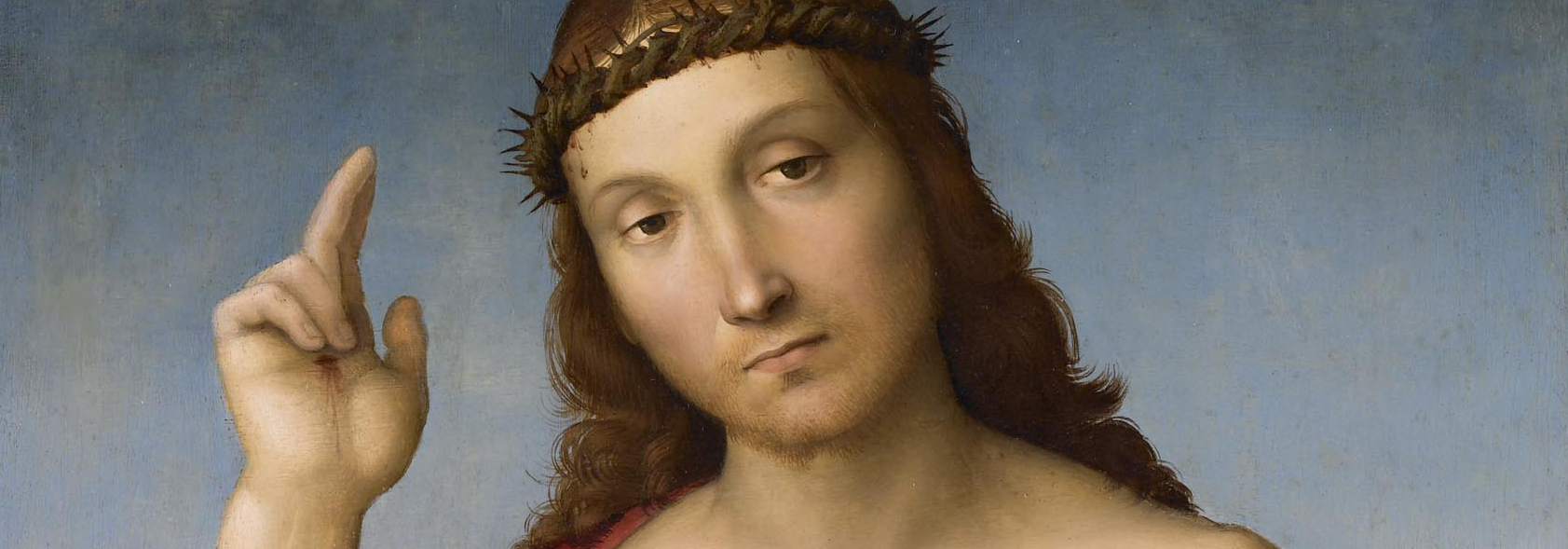
One of the highlights of the exhibition is a work by Raphael—an artist not represented in any Dutch collection. Around 1505, he painted a small panel featuring a moving depiction of Christ as a half-length figure. Also absent from Dutch collections is Raphael’s older contemporary Giovanni Bellini, represented here with an intimate yet static Madonna and Child. The exhibition further features imposing portraits by both Titian and Tintoretto.
Life-Size Portraits
No fewer than four works by Giovanni Battista Moroni—the greatest portraitist of sixteenth-century Lombardy—are on display. Among them are two magnificent full-length, life-size portraits of Gian Gerolano Grumelli and his wife, Isotta Brembati. With references to classical architecture and sculpture, these paintings reflect the classically inspired, humanist Renaissance culture that flourished in sixteenth-century Northern Italy.
This exhibition has been made possible with the support of: