


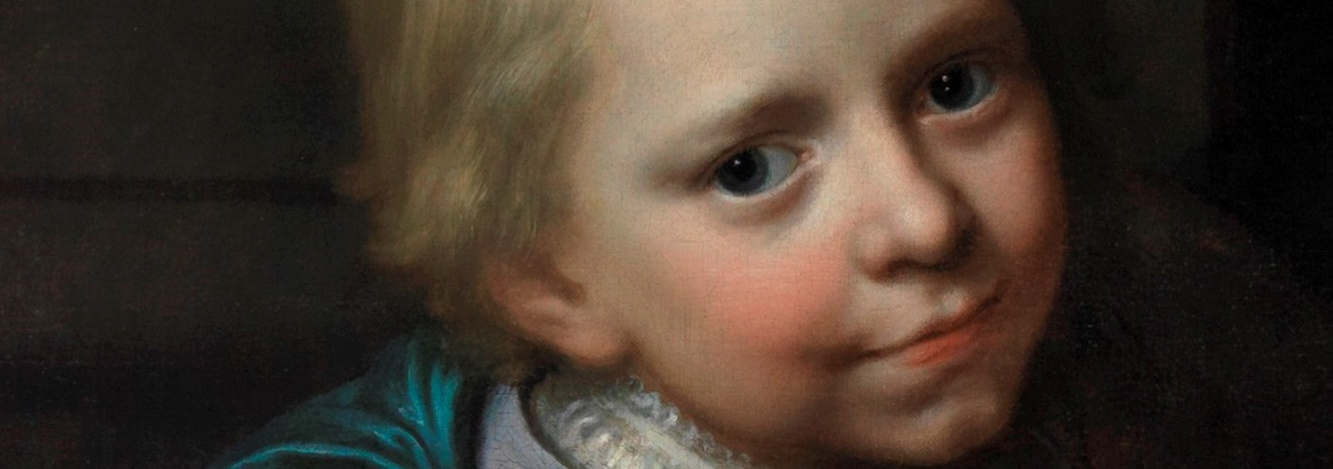
After stylistic analyses and a study of the biographical data known about the family, the portraits in this exhibition often turn out to be far from truthful. For example, in the year the painting was made, the family had five children, while seven children are depicted. In other cases, deceased family members are portrayed as living figures. The civil servant Willem van den Kerckhoven from The Hague had himself and his wife painted by Jan Mijtens along with all fourteen of their children. Five of the fourteen children had already passed away and were depicted as little angels in the air. When, three years later, another son was born, he was painted next to his father’s knee. The ‘family photo’ was complete once again.
Keeping the Family ‘Up to Date’
Even after a painting was completed, changes could still be made. After a new marriage or the birth of a child, the portrait was sometimes updated to reflect these events. Figures could also be painted out — either because someone had passed away or due to a family dispute, which led to someone being erased from the family.
For example, in the portrait by Wybrand Hendriks of the Amsterdam merchant Jacob Feitama and his wife Elisabeth de Haan, there was originally a second woman depicted, presumably one of their daughters. She has since disappeared from the portrait.
Photoshopping
Where today photoshopping allows us to manipulate seemingly lifelike photos, it turns out that the apparent realism of family portraits from earlier centuries often conceals the use of artistic tricks. The Hague painter Jan Mijtens was a specialist in family groups and frequently took liberties with reality. But artists such as Bartholomeus van der Helst, Nicolaes Maes, and Gerard ter Borch were also guilty of this. In total, over 40 paintings and pastels will be on display at Rijksmuseum Twenthe.
The Verspronck Family
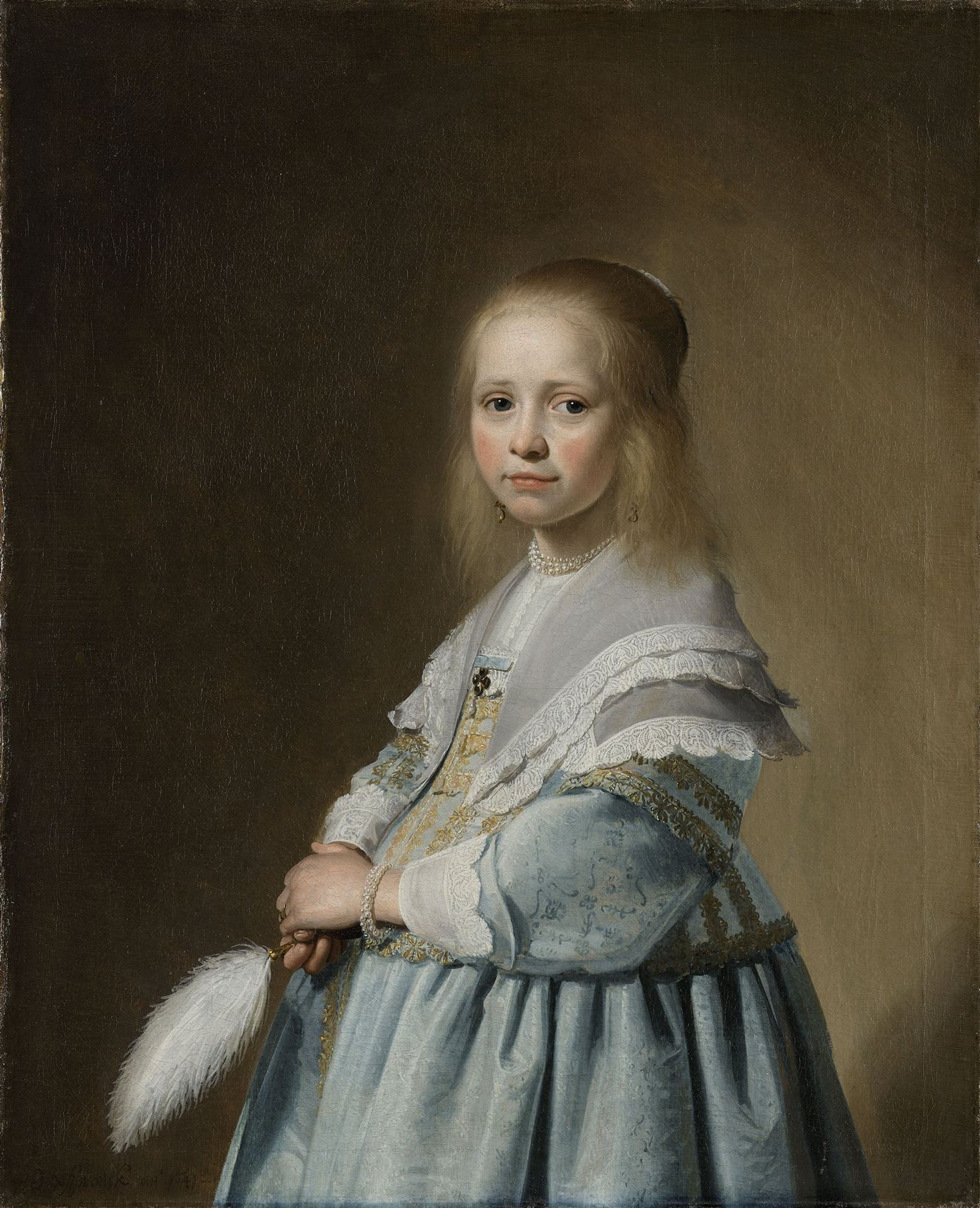
One of the highlights of the exhibition is the reunion of the famous Girl in Blue (Rijksmuseum, Amsterdam) with her parents. All three were painted around 1641 by Johannes Cornelisz. Verspronck. Here too, a kind of family tragedy occurred when the fragile Girl in Blue was separated from her parents in 1922. Alone, she was taken to the Honor Gallery of the Rijksmuseum Amsterdam. After several relocations, her parents ended up at Rijksmuseum Twenthe. Especially for Lief & Leed, father, mother, and daughter are reunited for four months.
Joy & Sorrow is (partly) made possible with financial support from Fonds 21, M.A.O.C. Gravin van Bylandt Stichting, Roelvink Fonds, and De Gijselaar-Hintzenfonds.


