


- Home
- >
- En
- >
- See and do
- >
- otto marseus van schrieck and the discovery of the 'bible of nature'
Otto Marseus van Schrieck
and the Discovery of the 'Bible of Nature'
Otto Marseus van Schrieck painted forest still lifes filled with plants, flowers, fungi, and creatures. Rijksmuseum Twenthe is hosting the first exhibition dedicated to the work of this peculiar Dutch master, who was nicknamed 'the Snuffelaer' (the Sniffer).
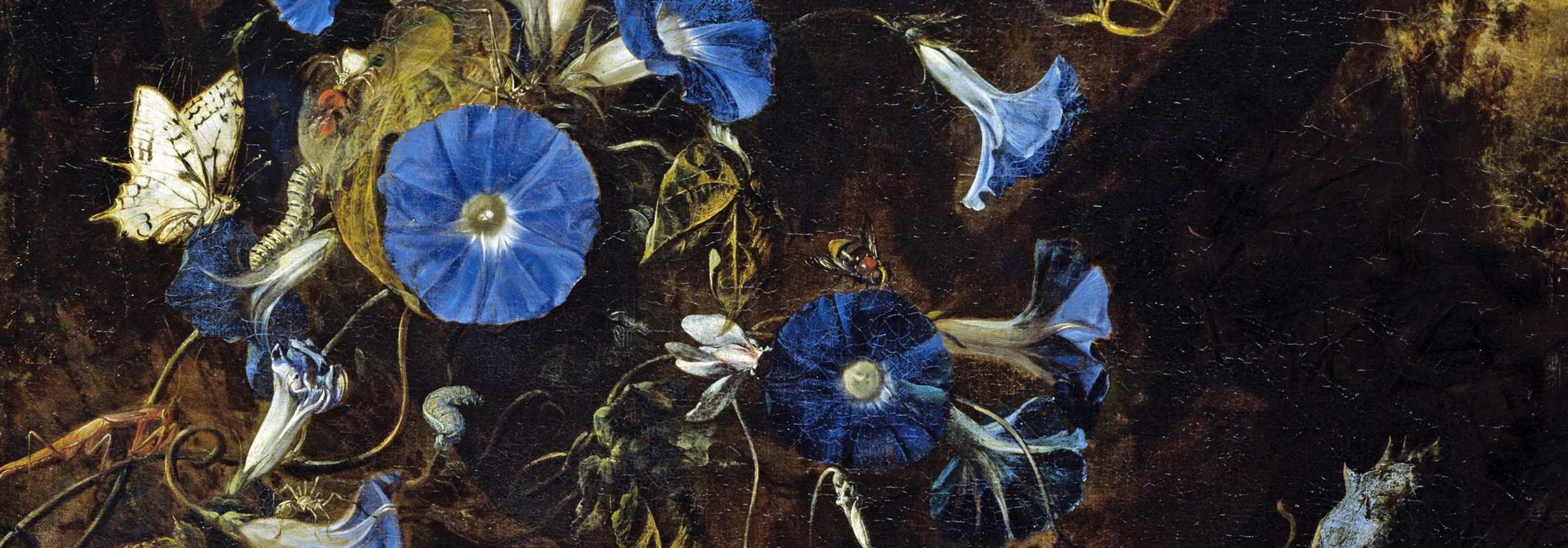
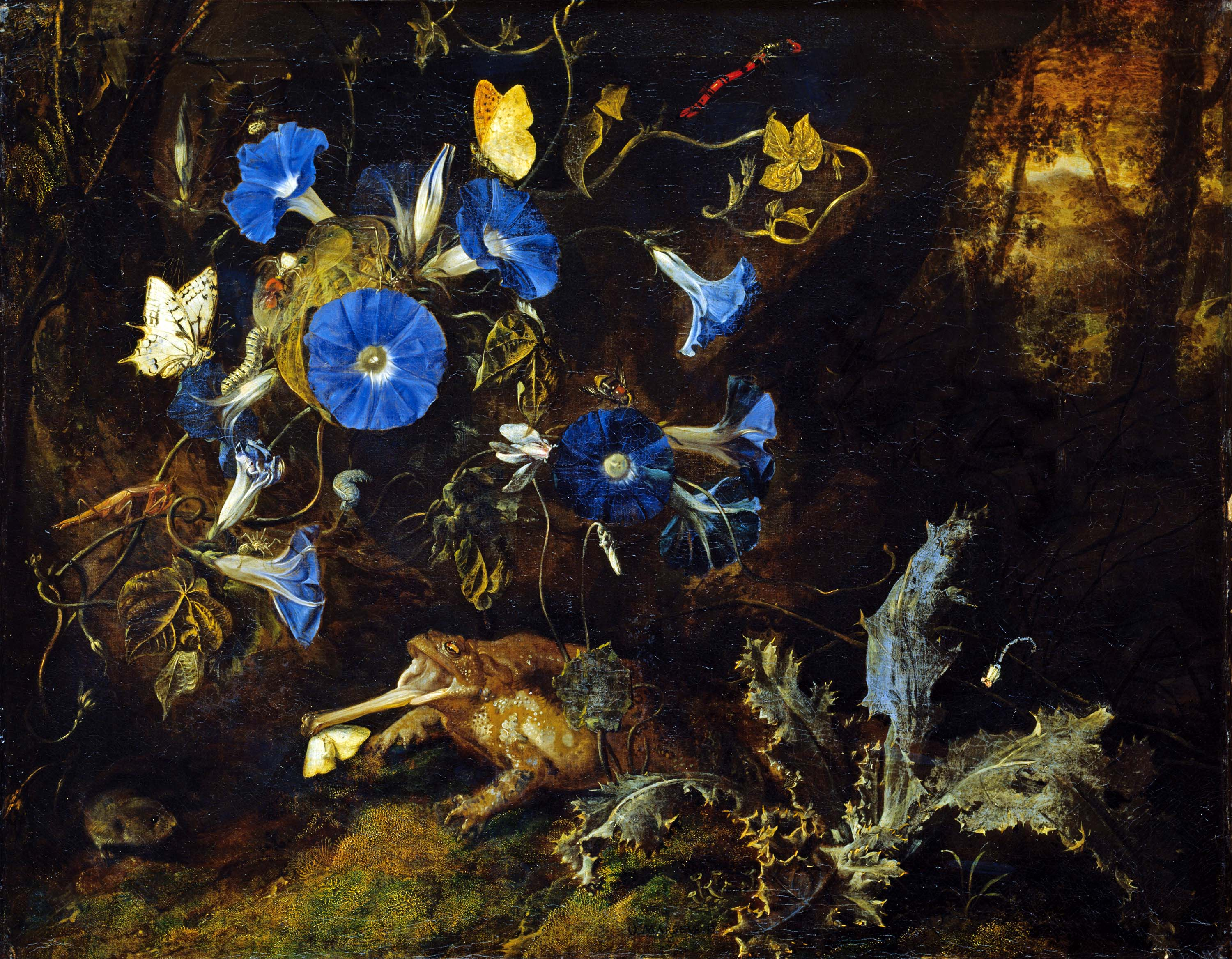
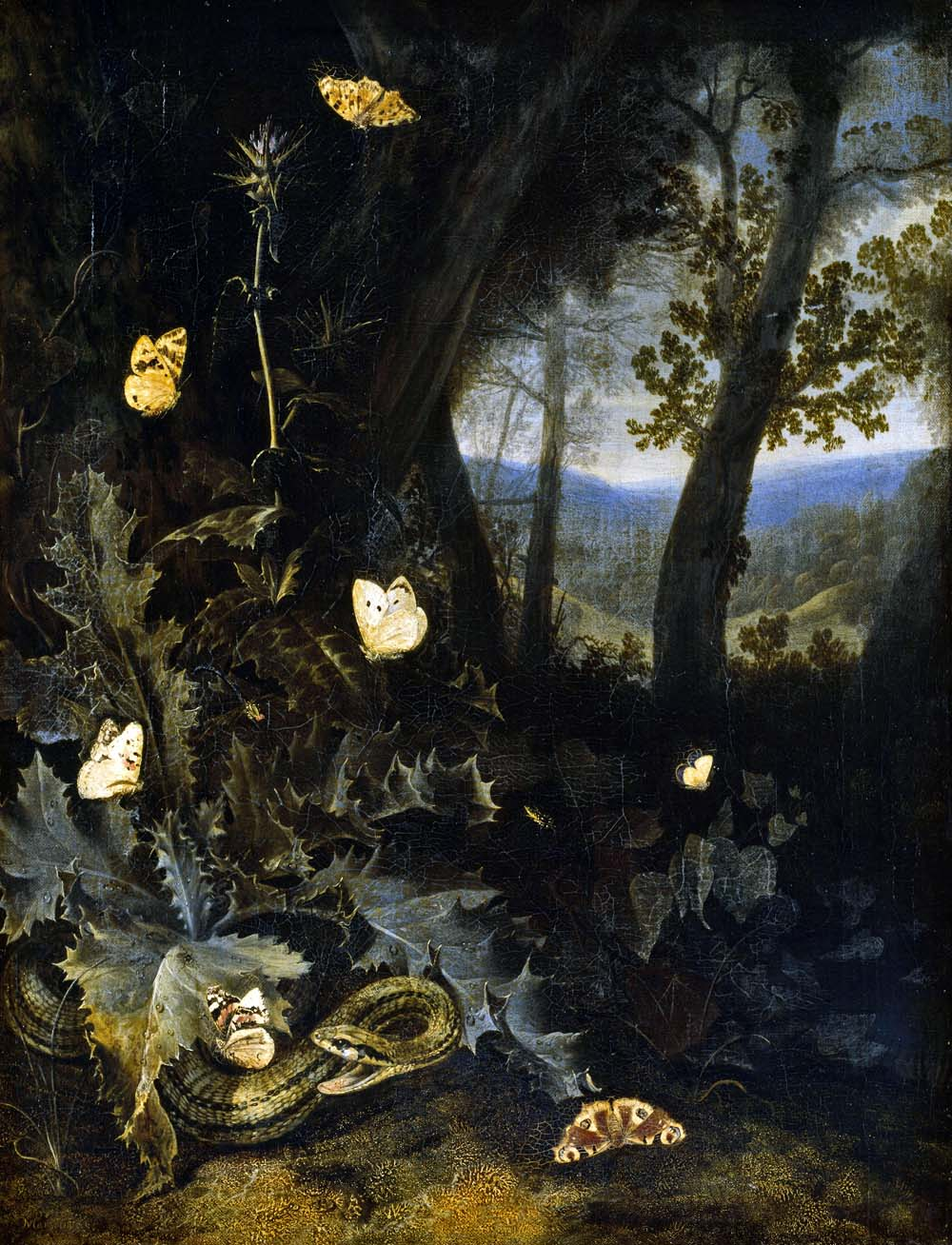
Otto Marseus van Schrieck (c. 1620–1678) was a pioneer. He was fascinated by the flora and fauna of life close to the ground — with insects, reptiles, and snakes. He painted the forest floor, and in doing so, introduced a new genre: sottobosco, or forest floor still life. Before him, hardly anyone paid attention to the animals that, as Aristotle had taught us, stood at the very bottom of the ladder of nature — the scala naturae. Insects, toads, and lizards were considered useless creatures, associated with decay and mortality. Especially the snake, of course, which as the deceiver in paradise, came to occupy the lowest rung in the natural order.
In Otto Marseus van Schrieck’s paintings, it is precisely these creatures — God’s “least esteemed creations” — that take center stage and become the eye-catchers of his dark, slippery, yet strikingly beautiful forest scenes.
The Snuffelaer
Otto Marseus van Schrieck was curious and always poking around, searching for snakes, toads, lizards, insects, and strange plants and herbs. During his stay in Rome between 1648 and 1655, he was nicknamed the Snuffelaer (the Sniffer) by his friends in the artists’ brotherhood known as the Bentvueghels. The Snuffelaer observed, marveled at, and reimagined nature. He was highly successful and inspired a small but influential circle of followers, including Rachel Ruysch, Elias van den Broeck, and the Neapolitan painter Paolo Porpora.
His works sold for high prices, and his fame reached the European elite. Among the most important collectors of his art were Cardinal Leopoldo de’ Medici and Grand Duke Ferdinando II de’ Medici in Florence.
Butterfly Wings and Living Snakes
In the Netherlands, Otto Marseus van Schrieck settled in the ‘Waterrijk’ area outside Amsterdam, allowing him to stay close to nature for ongoing study. According to the biographer Arnold Houbraken, the painter kept live snakes in his studio, carefully positioning them as models to paint them with precision.
The forest floor offered him a wealth of possibilities. At times, he even pressed the wings of real butterflies into the paint.
Between Art and Science
Van Schrieck’s forest floor still lifes are an artistic reflection of the scientific debates taking place at the time. There was growing fascination with the origins of the “least esteemed creatures” that Van Schrieck painted. These organisms were still referred to as spontaneous — animals believed to arise out of nothing, without reproduction.
Previously, such creatures had received little attention in both science and the arts, but by the end of the 16th century, they were being studied in earnest within certain intellectual circles. Otto Marseus van Schrieck moved at the intersection of art and science. He was, among others, a close friend of Jan Swammerdam, a leading scientist and pioneering researcher of insects.
International Collaboration
This is a travelling exhibition that comes to Rijksmuseum Twenthe from the Staatliches Museum Schwerin in Germany. In Schwerin, the exhibition is on view from July 7 to October 15, 2017. In addition to a large number of works from the collection of the Staatliches Museum Schwerin and several paintings from our own collection, the exhibition is supported by various museums both in the Netherlands and abroad.
Creatures
This exhibition is part of a trio of shows centred around the theme of creatures, organised in the autumn of 2017 by Rijksmuseum Twenthe and Museum TwentseWelle. In addition to Otto Marseus van Schrieck, Rijksmuseum Twenthe also presents nine contemporary artists in the exhibition The Nature of Things. Meanwhile, the exhibition From Zero to Millipede at Museum TwentseWelle explores the mechanics of all animals.


