- Home
- >
- En
- >
- See and do
- >
- Permeke and the Flemish Expressionists
Permeke and the Flemish Expressionists
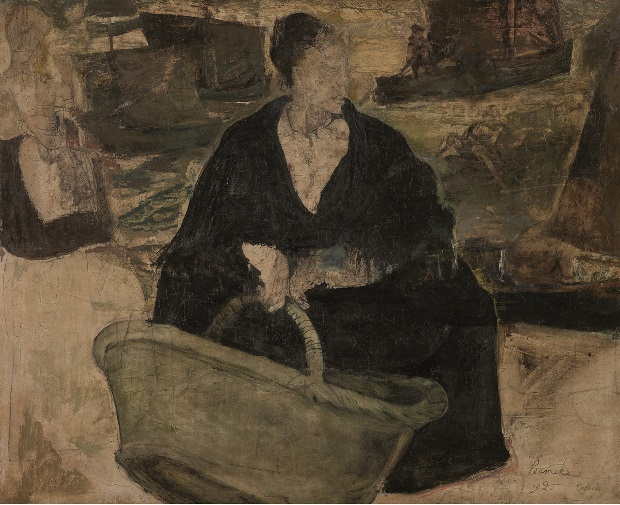
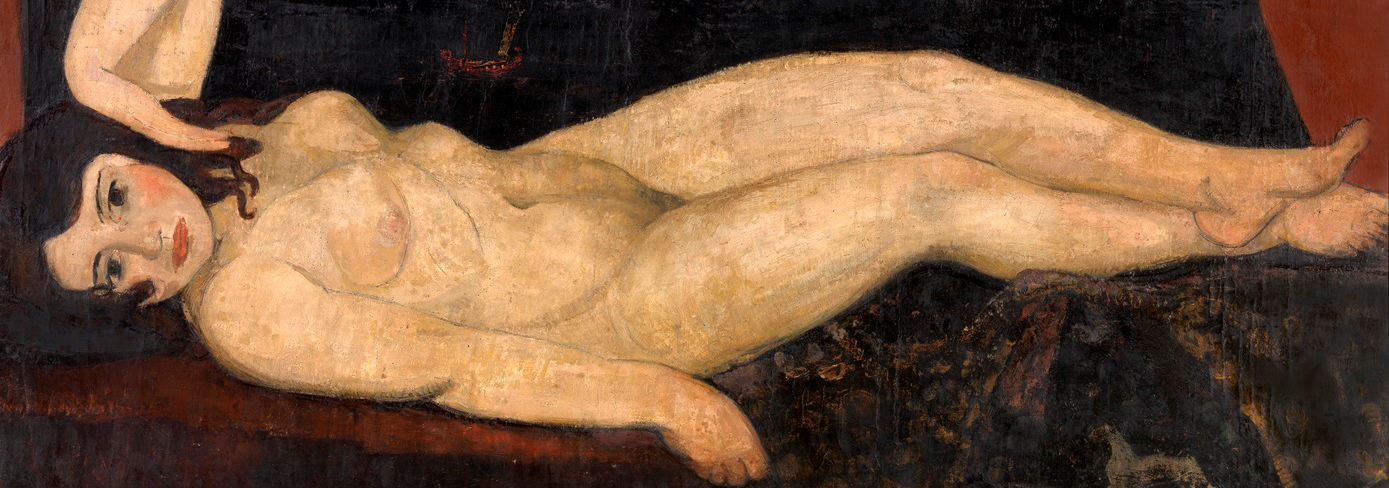
The selection of over eighty works by Constant Permeke, Frits van den Berghe, Gustave de Smet, and other Flemish expressionists from the KMSKA showcased the artists’ quest for the essence of existence. These are the Flemish expressionists: raw & pure. The finest, most intimate, and most authentic expressionist painting in Europe, on display at Rijksmuseum Twenthe.
Flemish Expressionism
Never before have the Flemish expressionists been presented from this perspective. The paintings, drawings, and woodcuts are characterized by a distinct voice, independent of prevailing European trends. They are genuine emotional documents. The angular, blocky forms of fishermen, farmers, and women are portrayed without embellishment.
The central figures within Flemish expressionism are Constant Permeke (1886–1952), Frits van den Berghe (1883–1939), and Gustave de Smet (1877–1943). Although the Flemish expressionists did not form a school bound by a program or shared manifesto, they did share a common vision. Flemish expressionism is seen as a reckoning with Impressionism and is part of a broader European revolution: Cubism in France, Futurism in Italy, and Expressionism in Germany.


The Birth of Expressionism: Expressing Emotions in Paint
At the beginning of the twentieth century, Europe was torn apart by underlying tensions that eventually culminated in the two World Wars. It was an era with little room for discussing feelings with friends or family. As a reaction to these suppressed emotions, artists across Europe developed a desire to express their subconscious through their work. Imitating reality became secondary to conveying feeling.
From the 1920s onward, the term expressionism was used throughout Europe to describe painters and sculptors who dealt with colors and forms in a purely subjective way to express their feelings and intuitions. However, the Flemish approached political tensions quite differently than the German expressionists. The work of the giants of German expressionism—Ernst-Ludwig Kirchner (1880–1938), Wassily Kandinsky (1866–1944), and Franz Marc (1880–1916)—served as a manifesto: a call to reform art academies and a clear protest against the tense political climate surrounding the two World Wars.
The Flemish, on the other hand, longed for a pure, authentic way of life in which greed, desire, and aggression had no place.
Back to the Source
In their search for this authentic way of life, the Flemish expressionists withdrew from the city at the start of the twentieth century and settled in artist colonies and fishing villages. Here, they surrounded themselves with the harsh and unpolished existence of farmers and fishermen. The idea that simple rural workers had an authentic and therefore better way of life than city dwellers is rooted in primitivism, whose most important representative was Paul Gauguin (1848–1903).
Like the primitivists, the Flemish expressionists believed this lifestyle was preferable for modern times. They glorified the spontaneous, unspoiled, naïve, and intuitive qualities of the ‘primitive artists’ and contrasted these with the academic, convention-bound Western art tradition. Instead of seeing the lack of perspective and realism as proof of the ‘primitive peoples’ low development, they admired the beauty of abstraction and used it as a guiding principle in their own work. Ultimately, the Flemish expressionists aimed to create art free from any artifice or refinement.
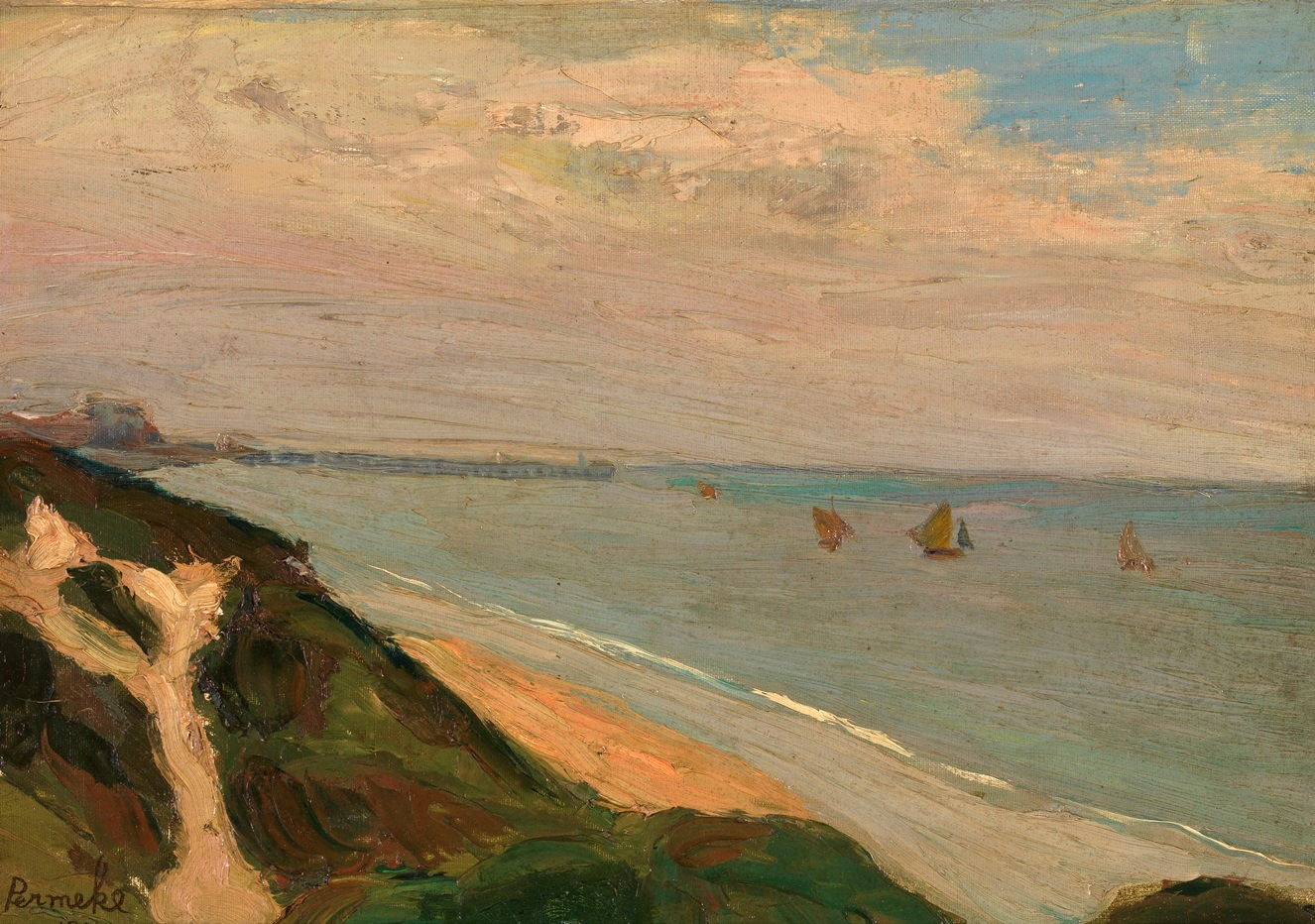
Trilogy of Flemish Art in Collaboration with KMSKA
The Royal Museum of Fine Arts Antwerp (KMSKA) is closed for renovation for the coming years. Paul Huvenne (director of KMSKA) and Arnoud Odding (director of Rijksmuseum Twenthe) have seized this opportunity to establish a long-term collaboration. Over the course of fourteen months, Rijksmuseum Twenthe will present no fewer than three exhibitions featuring exceptional sub-collections from KMSKA, widely regarded as the most important museum in Flanders.
Until the end of 2014, these exhibitions are presented in succession: Permeke and the Flemish Expressionists, Rubens and the Flemish Baroque and Rogier van der Weyden and the Flemish Primitives. A large part of the works on view have never before been shown in the Netherlands.