


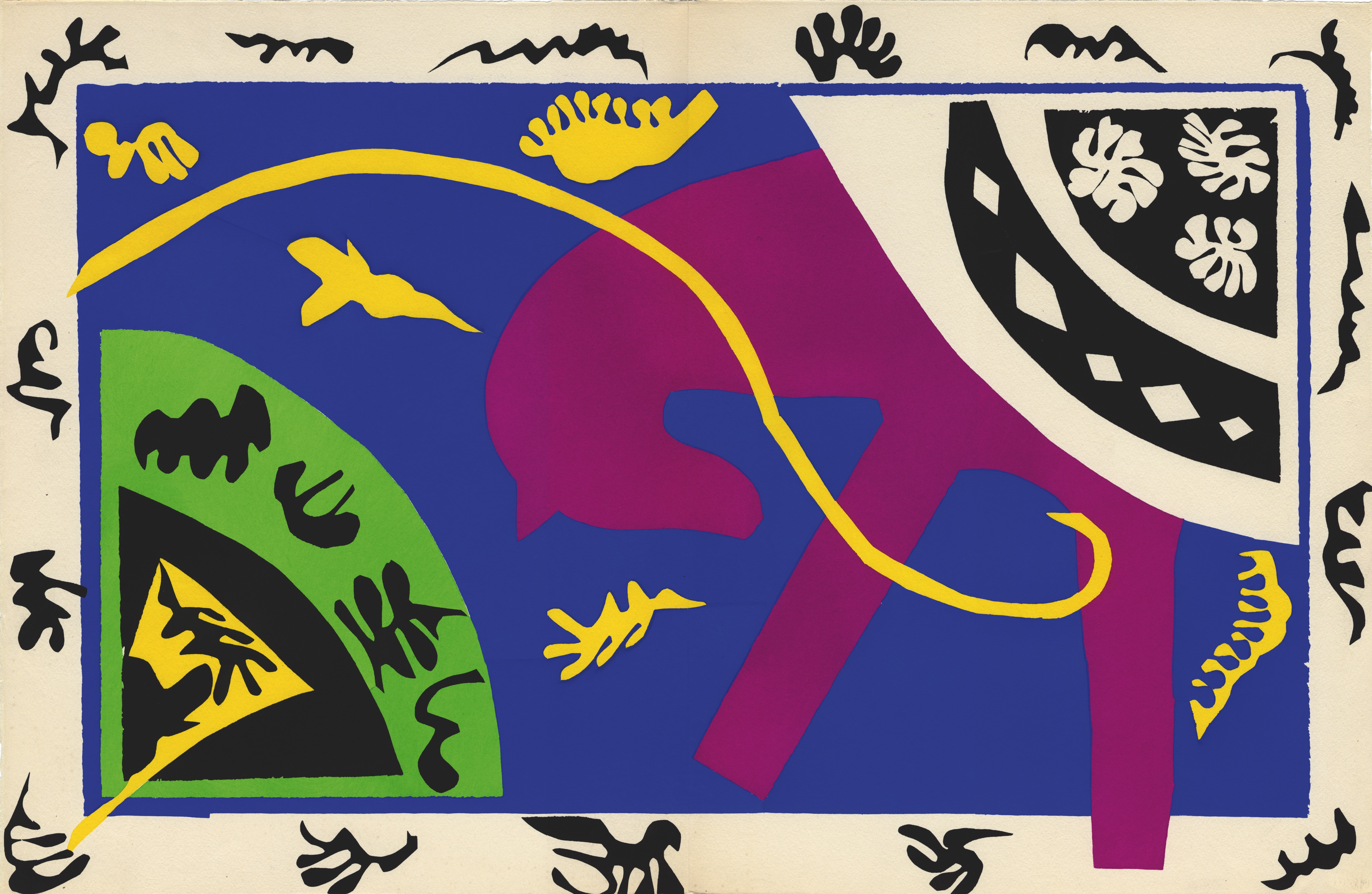
In collaboration with the Pablo Picasso Museum in Münster, Rijksmuseum Twenthe presented works by Picasso and Matisse in a dual exhibition centered on the line in visual art. Featuring pieces from the graphic oeuvres of these modern art giants, alongside numerous works by artists such as Toorop, Kirchner, and Van Heemskerck, the museum examines the line as a fundamental element of modern art.
As great masters of modern art, Pablo Picasso and Henri Matisse mastered the art of the line like no other. The line is the ultimate tool for the modern artist at the beginning of the 20th century, a time when art increasingly focused on interpretation, expression, and form. Lines give meaning to shapes; they possess such expressive power that a simple stroke of the pen can create a recognizable face, figure, or object on paper. Lines distinguish between main subject and detail, strip away everything unnecessary, leaving only the essence. Assisted by our imagination, the line is the language of modern art.
Picasso and Matisse
The modern masters Pablo Picasso (1881–1973) and Henri Matisse (1869–1954) came of age at the end of the 19th century, when the centuries-old notion of artwork as a window on the world—a faithful depiction of reality—was increasingly questioned. The invention of photography played a major role in this shift. How could art differentiate itself from the realistic photograph? Initially, artists sought the answer within reality itself. It was their task to recognize the most essential and meaningful forms in nature and capture them in their work. To add something personal to reality—a feeling, emotion, or idea. Art became more about expression and form, where line work was crucial.
For Picasso, drawing was the starting point of the creative process—a spontaneous capture, relentless. Sometimes a tangle of scratches, sometimes a few precise lines: in his graphic oeuvre, he used the medium to experiment, without a final endpoint, creating images through the process. Matisse himself noted that his line drawings are the purest, most direct translation of his emotions. He aimed for a framed, balanced beauty. For example, in the depiction of a woman’s body: “First and foremost, I give her elegance and charm, but the goal is to give her something more. I will condense the meaning of the body by seeking its essential lines.”
The Language of Modern Art
Picasso & Matisse. Beauty is a line shows, through the works of Picasso, Matisse, and many other artists, that from the beginning of the 20th century, the form of the artwork gradually took precedence over representation; that artists sought an art that is harmonious, expressive, decorative, or otherwise meaningful—but above all more than just a window on the world; and that the line is the ultimate tool for this. The line as the language of modern art.
The exhibition features over 40 works on paper by Picasso and Matisse from the collection of the Kunstmuseum Pablo Picasso in Münster. The lines of these modern masters are presented in surprising combinations, alongside works by contemporaries and contemporary artworks in which the line is a fundamental element. Art from the diverse collection of Rijksmuseum Twenthe and various loans from (inter)national collections, including works by Ernst Ludwig Kirchner, Jacoba van Heemskerck, Jan Toorop, Charley Toorop, Jan Sluijters, and Zoro Feigl.
A Two-Part Exhibition: International Collaboration Enschede/Münster
Picasso & Matisse. Beauty is a line is part of a two-part exhibition. The graceful lines, expressive strokes, and classical contours in Enschede are connected to the exhibition at the Kunstmuseum Pablo Picasso in Münster, where geometric explorations, minimalist stripes, and spontaneous drawings by artists such as Bart van der Leck, Sol LeWitt, and Cy Twombly are shown. The exhibition Beauty is a line. Von Cy Twombly bis Gerhard Richter runs concurrently.


Publication
A richly illustrated catalog has been published in conjunction with the exhibition Picasso & Matisse. Beauty is a line. Would you like to enjoy this double exhibition at home or learn even more? Order your copy of the catalog now and benefit from free shipping! You can purchase the book in the webshop of Uitgeverij Waanders & de Kunst. At checkout, enter the discount code "TWENTHE". Not only will you receive free shipping, but you will also support the museum with your purchase.


