


- Home
- >
- En
- >
- See and do
- >
- rubens, jordaens, van dyck – the flemish baroque
Rubens, Jordaens, Van Dyck
The Flemish Baroque
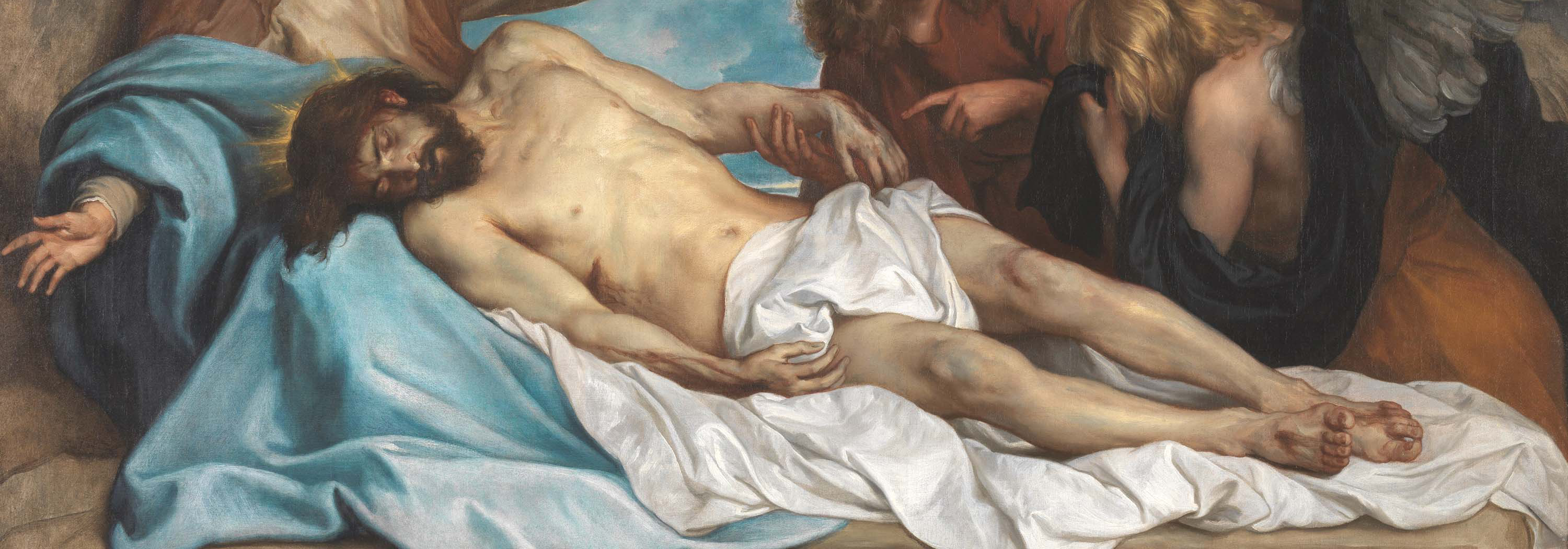
A greater contrast with the austere landscapes of Ruisdael and the symbolically charged genre scenes of Jan Steen from the Reformation-era Northern Netherlands seems impossible. But is this image really accurate? Is there truly such a vast difference between north and south? From April 5 to September 28, 2014, Rijksmuseum Twenthe presented, in collaboration with the Royal Museum of Fine Arts Antwerp, the exhibition Rubens, Van Dyck, Jordaens – The Flemish Baroque.
Premiere
Through more than fifty paintings and several dozen prints, the exhibition offers insight into the meaning, function, and impact of 17th-century art produced in Flanders. The majority of these masterpieces have never before been shown in the Netherlands.


Masterpieces
The clichés surrounding the Flemish Baroque exist for good reason: the imposing masterpieces of Peter Paul Rubens (1577–1640) perfectly embody the defining features of the Flemish Baroque. His convincing, dynamic, and emotional painting style draws the viewer into the suffering and passion of Christ and the saints—exactly what the Counter-Reformation needed to guide stray believers back to the fold after the devastations of the Beeldenstorm. His cleverly devised iconographic programs with mythological or allegorical themes and impressive portraits, in turn, reinforced the authority of the nobility.
With his powerful, energetic, and theatrical scenes, Rubens uniquely fulfilled the demands of such patrons. His pupil Anthony van Dyck (1599–1641) and contemporary Jacob Jordaens (1593–1678) were no less accomplished. It is no wonder that these three painters became leading figures who still shape our vision of the Flemish Baroque today. The exhibition at Rijksmuseum Twenthe offers a unique view of the full scope of the Flemish Baroque by presenting masterpieces by Rubens, Van Dyck, and Jordaens alongside paintings and prints by contemporaries made for a new market: the wealthy citizens of Antwerp.
Intimate Bourgeois Homes
The Flemish Baroque is not only defined by familiar clichés. Alongside the church and nobility, a new kind of art buyer emerged in the 17th century: the wealthy bourgeoisie. For the first time in Western history, Antwerp artists began producing works for a free, anonymous market. Under the motto “something for everyone,” new genres were born, such as landscape painting, still lifes, and scenes from daily life. Image-making became big business. Yet many of these works still carried messages steeped in deep Christian morality. The salvation of the soul remained a recurring theme.
Themed Rooms
Through themed rooms, this exhibition takes visitors back to 17th-century Antwerp. Naturally, the grand altarpieces and monumental mythological scenes are present. But intimate scenes from bourgeois homes also have their place, along with touching family portraits, devotional prints, and still lifes that remind us of life’s transience. The evocation of a 17th-century “kunstkamer” (art cabinet), with walls and ceilings densely packed with paintings, completes the picture.
The final word, however, belongs to Rubens himself. After all, the great master was a man of flesh and blood: flamboyant and confident, but also an artist who sketched, drew, experimented, and closely supervised his assistants until they created exactly what he wanted.


Triptych of Flemish Art in Collaboration with KMSKA
The Royal Museum of Fine Arts Antwerp (KMSKA) is closed for renovations for the coming years. Taking advantage of this, Paul Huvenne (Director of KMSKA) and Arnoud Odding (Director of Rijksmuseum Twenthe) have launched a long-term collaboration. Over fourteen months, Rijksmuseum Twenthe will present three exhibitions featuring special sub-collections from KMSKA, regarded as the most important museum in Flanders. Until the end of 2014, these are, respectively: Permeke and the Flemish Expressionists (already concluded), Rubens, Van Dyck, Jordaens – The Flemish Baroque (April 5 to September 28, 2014), and Jan van Eyck and the Discovery of the World (September 14, 2014 to January 4, 2015). Many of these works have never before been seen in the Netherlands.
Sponsors
The exhibition Rubens, Van Dyck, Jordaens – The Flemish Baroque is made possible by KMSKA, Aon Artscope, Friends of Rijksmuseum Twenthe, the Ministry of Education, Culture and Science, the Province of Overijssel, the Municipality of Enschede, and Roombeek Cultuurpark.


