- Home
- >
- En
- >
- See and do
- >
- The Rhythm Painter – Audiovisual Abstractions by Jaap Drupsteen
The Rhythm Painter
Audiovisual Abstractions by Jaap Drupsteen
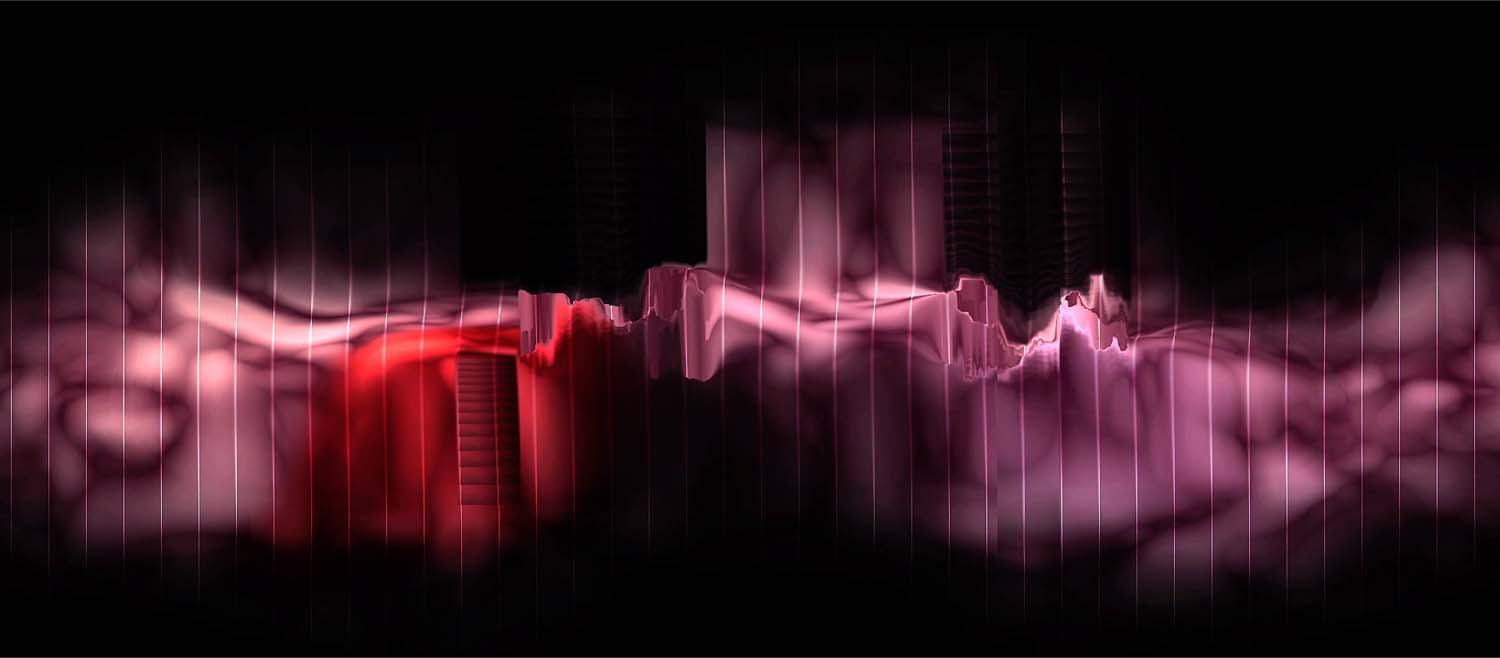
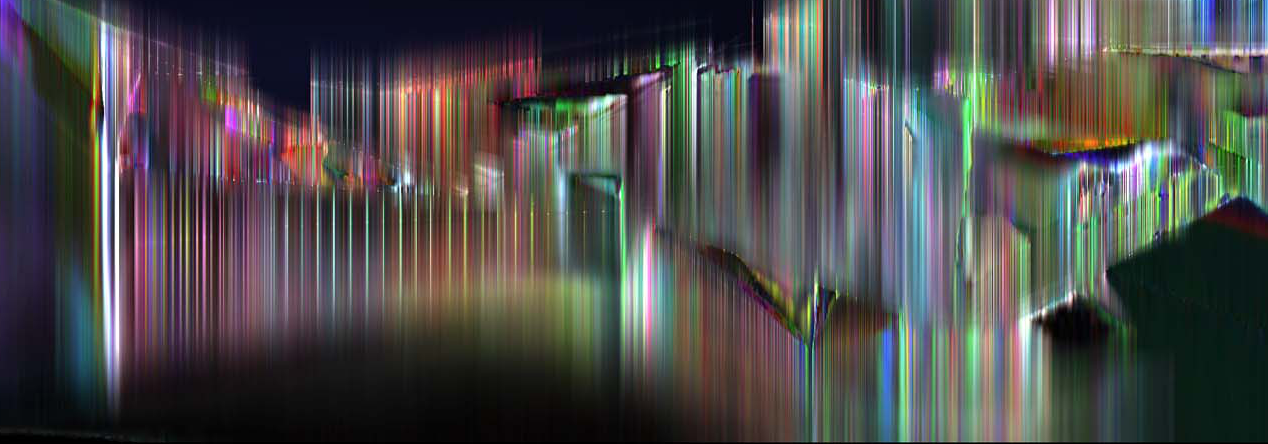
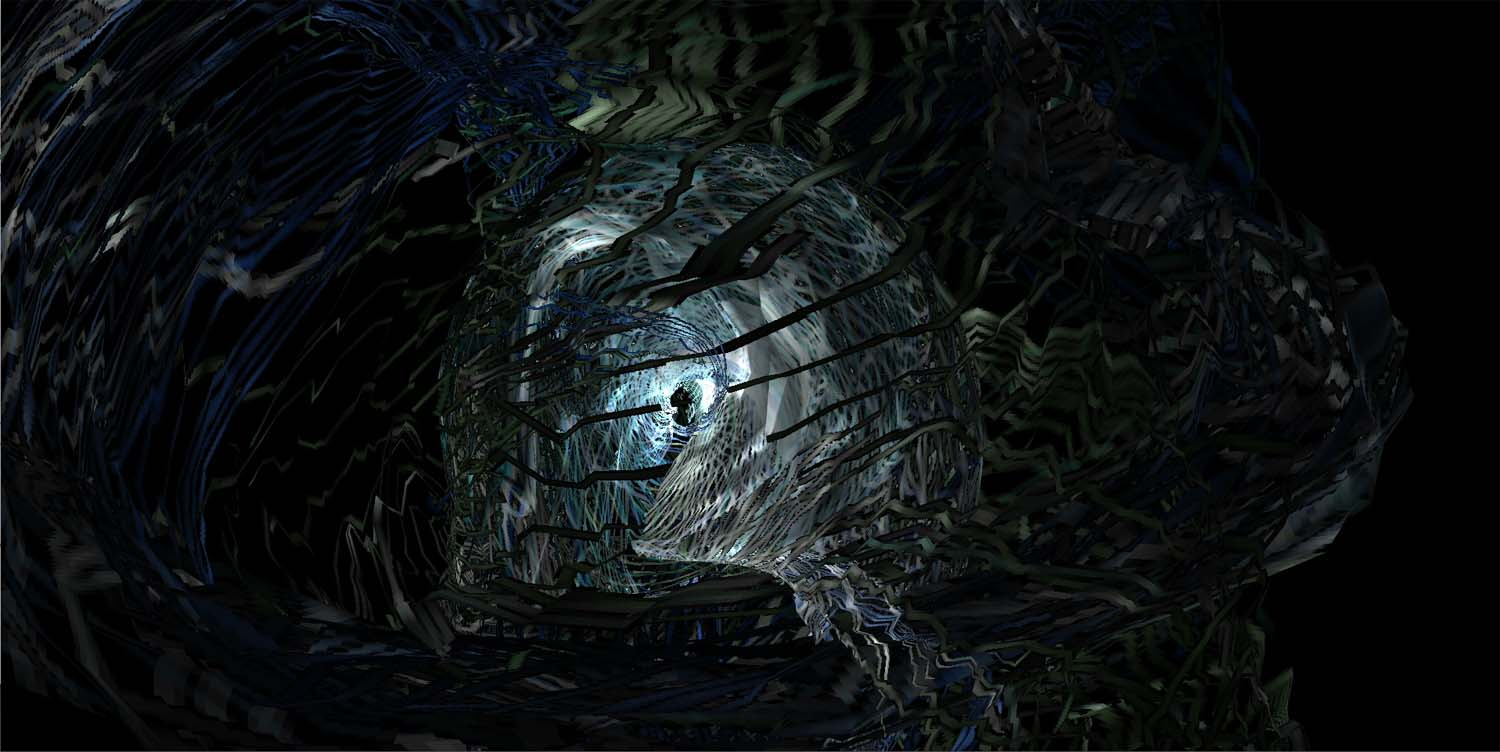
Imagine a space of over 400 square meters, filled with twelve colossal abstract images projected onto the walls. These mesmerizing abstractions continuously evolve. The images pulse in sync with seven different musical streams, all synchronized to a single tempo. Image and music merge into one sublime experience—Synchresis. The visuals swing, just like the music.
The Rhythm Painter at RMT
The Rhythm Painter is an audiovisual installation that fills every corner and wall of a spacious exhibition hall measuring over 400 square meters. The installation consists of dozens of audiovisual compositions that merge into one cohesive experience. We might call it an experience—if that word hadn’t been so carelessly overused.
The Rhythm Painter was commissioned as a new work and is included in the Rijksmuseum Twenthe collection in two forms: first, as the large-scale installation with twelve different projection surfaces, and second, as a somewhat condensed version that can be installed in a standard exhibition space between 80 and 150 square meters. The 2016 presentation at Rijksmuseum Twenthe was site-specific, but future exhibitions can be adapted to a wide variety of venues.
Who is Jaap Drupsteen?
Drupsteen was trained at the Academy for Art and Industry (AKI) in Enschede. He worked as a graphic designer for organizations such as NTS, NOS, VPRO, and VARA, specializing in creating title sequences like those for Het Gat van Nederland, network styling, music videos, and video productions. He also served as creative director at Signum (part of the BBDO group).
He gained widespread recognition for designing the Dutch passport and a series of banknotes for De Nederlandsche Bank in denominations of 10, 25, 100, and 1000 guilders. These banknotes were withdrawn from circulation with the introduction of the euro. Additionally, he designed the exterior of the Beeld & Geluid building in Hilversum.
A Quest for Synchresis
Drupsteen’s work is the result of an exploration into Synchresis, a concept coined by French composer and theorist Michel Chion. Chion describes Synchresis as the forging of an immediate and necessary relationship between something one sees and something one hears at the same time. He developed his theories by extensively analyzing the use of sound in film, concluding that the combination of image and sound has an unavoidable effect on the observer. He calls this the audiovisual contract: a kind of symbolic contract that the audio-viewer enters into, agreeing to think of sound and image as forming a single entity.
The effect is reciprocal. The perception of sight and hearing influence each other. They add value to one another: on the one hand, sound shows us the image differently than what the image shows alone; on the other hand, image makes us hear sound differently than if the sound were ringing out in the dark.
A Technical Problem
The search for perfect synchresis is not just an artistic challenge, but also a long-standing technical quest—one that Jaap Drupsteen, in collaboration with others, has only recently managed to resolve. While there is plenty of software available that enables synchronization between image and sound, the universal issue is that these animations follow the audio rather than being driven by it directly.
Audio recordings of rhythms, even at the highest digital quality, always appear as waveforms in the visual domain. Even a dry, short click has a minimal rise time before reaching full strength. As a result, audio-driven visual pulses tend to move sluggishly and fail to distinguish between soft and powerful sounds. They rarely generate excitement. As Drupsteen puts it, they never truly “swing.” That only happens when animations are triggered directly by musical sources and flash with millisecond precision.
Differences in Time Measurement
Alongside the artistic quality of his audiovisual productions, precise synchronization is the defining feature of Drupsteen’s work. A key cause of poor synchronization lies in the fundamental differences in time measurement between audio and video environments. Music is structured in bars and beats, with highly nuanced and variable tempos—often accurate to several decimal places—while video tools rely on fixed, relatively coarse time units: FPS (frames per second).
The mismatch becomes especially problematic when trying to synchronize visual movement to musical rhythms. While music software can assign a timecode to every note, video design and editing environments are constrained by frame rates—e.g., 25 FPS—creating a rigid grid. Visual repetition can only start at set intervals, like teeth on a gear. After just two cycles, those intervals start to drift, and the visuals fall out of sync. That’s why you almost never see visuals that truly swing.
This problem cannot be solved using existing video software. Since 1979, Jaap Drupsteen has worked intermittently on technical solutions to overcome this disconnect. With decades of experience in both video and music production software, he eventually succeeded in bridging this divide. Since around 2000, he has been able to create motion graphics that maintain precise, sustained synchronization with musical rhythms—at any tempo.